Saturday, April 11, 2026

Abortion - a conflict of rights?

Obviously not.

A fetus is not a being, it is not an organism, it is not an individual. It becomes all of the above when it individuates, that is when it is born. At that moment it becomes independent from its mother, by being able to perform the basic functions needed for the survival of a human being: it gets its oxygen through breathing, it digests food, it starts producing the antibodies required to protect its body in the world in which it will live forever. Until it is born the fetus remains a clump of cells, protected and nourished by the real, existing, fully individuated being: its mother. The fetus does indeed hold the potential to become an individual being. But until it materializes that potential, it is not.

Infancy is not just a new stage of development. An infant is not simply a more developed fetus. As opposed to the difference between an embryo and a fetus, the difference between the fetus and the infant is fundamental not just in an epistemological level, but a metaphysical one. The act of being born is the TRANSFORMATION of the fetus into the infant. The essence of that thing has changed, the thing has become something else, entirely different.

The fetus is indeed human. But "human" used this way is a TYPE of a thing, not the THING itself. A heart, for instance, can be human, reptilian or avian, but that doesn't mean the heart itself IS a man, a crocodile or a chicken. The type of the fetus (or of the heart) does not determine what it IS. It remains a fetus (or a heart). That a heart is reptilian doesn't make it a crocodile. That a fetus is human doesn't make it a human being.

A fetus cannot be killed since it is not a being. A lion, a spider, a sunflower, a bacteria, all of them are living beings and can therefore be killed. A fetus can't, any more than one can kill a pancreas.

A fetus has no rights, since it is not an individual. Only individual human beings have rights. "Human rights" is misleading, giving the illusion that anything human might have rights. Not so. Again, "human" here makes the distinction between the types of BEINGS that have rights, not the types of RIGHTS. It means humans have rights, dogs have not. "Individual rights" would be more appropriate in this context, meaning human beings, such as a pregnant woman, have rights, human hearts (or fetuses) don't.

Friday, November 7, 2025

Can AI create art?


Definitions:

Art: A selective re-creation of reality according to an artist's metaphysical value judgments. Art serves a crucial psychological need for human consciousness, by concretizing abstract principles and providing inspiration for the observer to see reality through the artist's values. (By Ayn Rand, of course)

Objectivity: The ability of an observer to identify and acknowledge facts as they are in reality, unbiased by his emotions.

CHEV: Creation intended to Hold strictly Emotional Values.


The characteristics of a CHEV:

A CHEV is beautiful if the emotions it stirs are aesthetically pleasing. This quality is the basis on which an observer does, or does not, like the CHEV. This is a purely subjective evaluation based on the observer's aesthetic standards. Those standards may be implicit or explicit, innate or cultivated. 

A CHEV is good to the extent that it does convey to the observer the intended emotional values it holds. The evaluation must be objective. For that, the observer must be aware of the creator's intentions. This information can be obtained either through direct observation of the CHEV, or through the study of the creator's style, mood, values, period of his life, historical period and any other criteria that provides the context in which the CHEV was brought into existence.

A CHEV is art if the creator succeeds in isolating what he considers to be the essential aspects of reality, and then in integrating them into the physical characteristics of the CHEV, thus presenting a unified, coherent vision of what life is and what humans value. It is an objective evaluation.


Notes:

Objectivity does not guarantee a correct evaluation of whether the CHEV is art or good. The evaluation process must be based on all the necessary information required, and objectively acquired, for a correct result.

A CHEV can satisfy any of the three criteria, in any combination. Therefore it can be good and beautiful but not art. Or an ugly artistic creation. Or bad but beautiful. And so on.

The attributes of a CHEV should not be confused with the attributes of its subject. A creator can beautifully paint an ugly Medusa. Or badly sculpt a good Saint.

At every step of the process of creation, the creator is also an observer. He must constantly evaluate the prospect that his CHEV will, in the end, be good. This is easier for him than for any observer, since he already knows himself as the creator. It is the creator's choice to decide whether he intends his CHEV to be art or beautiful. And since beauty is in the eye of the beholder, i.e subjective, beautiful to whom?

The requirement for objectivity in evaluating the characteristics of good and art means that these qualities do not depend on any observer's aesthetic tastes. These two qualities are intrinsic in the CHEV itself and they can be present to a higher or lesser degree. A CHEV considered by the vast majority of observers as beautiful is not necessarily a piece of art. Or good. Or vice-versa.

A CHEV, if traded, has commercial value, which is determined based on offer and demand, just like any other commercial product or service. The CHEV's commercial value does not necessarily reflect its artistic value.


AI CHEV-s:

All the considerations above constitute the background for determining the status of CHEV-s created by Artificial Intelligence. The conclusions, at this point, should be obvious.

Just like any CHEV created by humans, an AI CHEV can be seen as beautiful and can even be good.

However, Nothing created by AI can be Art, since no AI is (yet) capable of metaphysical value judgments. An AI has no values since it does not have a life to sustain. Furthermore, the AI does not bother itself with metaphysical questions about its own place in the Universe, the nature of reality and the purpose of life.

A creator exclusively using AI to create something is not an artist.

A creator using AI as a tool in the process of creation is an artist only to the extent that the AI does not take decisions regarding the rendering of the values the CHEV is intended to hold. For instance, if the creator wants the CHEV to hold the value "Strength" and so he instructs AI "Paint a muscular man", that is not art. For it to be art it is the human creator who must decide which muscles should be depicted, how prominent they should be, how they reflect the light and how they cast shadows. But if the creator wants to render the value "Serenity" and so he tells AI "Fill the sky visible between the leaves of the tree with bright red", that is a legitimate use of AI and does not diminish the CHEV's quality of being art.


Wednesday, April 30, 2025

"Make Canada the freest country on earth"


That was Pierre Poilievre's promise if he became Prime Minister. And then he lost. And, as a consequence, we all did. This past election was the only time in my entire life that I voted 'for' a candidate, as opposed to 'against' the other one. Would Poilievre have been the greatest liberator ever? No, Javier Milei has raised the bar way too high. But Poilievre would have made a big difference. Enough to make our lives substantially better. Of course, it wouldn't have been him the one to raise our standard of living, but each and every Canadian in their own way, small or big, freed from government impositions, restrictions and regulations driven by political machinations at which the Liberals are absolute masters. But it's ok. We'll just have more of the same for the next four years. Maybe slightly better because Carney, as opposed to Trudeau, seems to know what he's doing. The Trump effect is still going to make it worse for us, but that can't be blamed on our Prime Minister regardless of who that is.

Poilievre's mistake was that he thought Freedom actually meant something to the Canadian citizen. It doesn't. What Canadians want is a better leader. A benevolent leader who knows how to steer the various segments of society so that they interact harmoniously, in a fair way, so that we all gain. They want a wise central planner who knows what 'fair' is, what the correct prices should be, how much we should borrow at the expense of our future generations, whether we should build roads, or housing or pipelines. The same He, We, Our - the terms in which any collectivist thinks. The idea of there being no leader sounds bizarre to most Canadians. Freedom is indeed a relatively new idea, and is poorly defined. As Yaron Brook says, did Braveheart really want freedom? No, he wanted a Scottish King instead of the English one. He would have laughed at a peasant's timid suggestion of no King. "You want anarchy??" Braveheart would have lashed out with a sneer.

It is even more incomprehensible when it comes to immigrants. Some have come here to escape oppressive regimes, others simply for a better life. Most for both. But none seems to grasp the obvious fact that the first causes the second. They believe life here is better than there only because the leaders here are most just, more fair, smarter, less corrupt, while Freedom remains an abstraction, with no practical meaning. Choosing Carney over Poilievre is their desire to get away with the contradiction, and live better with less freedom.

The reality is that the standard of living is directly proportional with the degree of individual freedom. To see that we just have to look around the world and throughout history. The evidence is there, before our eyes. But to look requires effort. No time for that now. Now we have tariffs to worry about. And then inflation. And then recession. And then health care, and then student loans, and environment, and immigration. And so on. We'll look when all these issues are behind us. Until then, we just need to find the wise leaders who will solve them.


PS. Maybe the Liberals will oppress (younger) Canadians slightly more, just enough so that retired Canadians get government-provided dental care. If not Freedom, at least free fillings.


Thursday, April 17, 2025

Trump will fail, like all socialist movements have.

All socialist^ attempts have failed*, or are in the process of failing, whether it's Soviet Russia, Maoist China or Maduro's Venezuela. Argentina was heading in the same direction, but Milei is saving it.

From that, it could be implied that the  policies of the Trump administration, being anything but socialist, will soon prove to be a total and complete success.

No, it won't. Quite the opposite. And that's not because the tariff retaliation of other nations, China's influence on third world markets, Jewish Cabal, out of control AI, or greedy corporate magnates. But for the same cause which inherently dooms socialism to failure: Lack of Individual Freedom. And Trump's policies are even farther from Liberty than they are from socialism. The tariffs are only an infringement of economic liberties, the tip of the iceberg, being easy to see, follow, analize and ultimately gaze and marvel at the devastation in their wake. The real destruction, however, comes from the political realm, the administration's disrespect, disregard and downright violation of individual rights. That's what will lead to political uncertainty, then economic uncertainty, then lack of investments, massive unemployment, distrust in the currency, the development of the black market, the unstoppable corruption in the Central government, and all the horrific effects seen in socialist countries. It doesn't matter whether the violation comes from a malevolent dictator, a sadistic King, a well-meaning authoritarian or from an anti-woke, not fully developed fetus. The consequences are the same.


^"Socialist" means a massive concentration of the society's means of production in the hands of the State.

*"Failure", from an economic standpoint, means a much lower standard of living for its citizens as compared to other societies around the world.

Friday, April 4, 2025

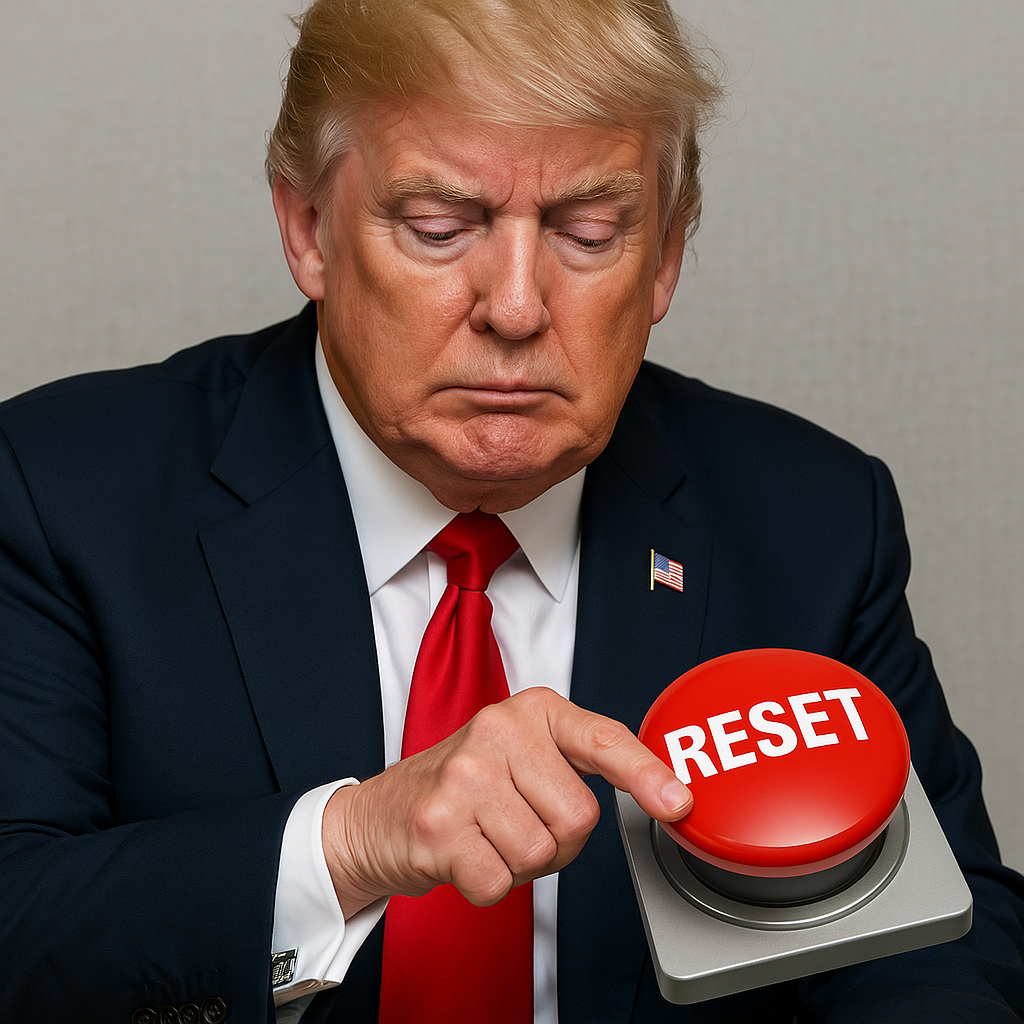
The Great Reset is finally here

Democrats, liberals, ecologists, socialists, communists, wokes, all the leftists embodied by the Davos elite, were working together on plans to achieve their Great Reset. It would have taken them decades, but with a lot of hard work, a few annoying acts from Green Peace and tomato soup museum vandals, they would have gotten it.

Hitler was slightly more efficient. He got his Great Reset in a few years, but he had to murder hundreds of his communist opponents.

Donald Trump is achieving his own Great Reset in just a few months, with virtually no violence. A record of efficiency, that should have been expected. Technology and the internet have made spreading stupidity a virtually effortless endeavor.

Tuesday, April 1, 2025

The lessons of "Adolescence"

I've just finished watching "Adolescence". An excellent mini-series, one of the best I've ever seen. Writing, directing and acting are all above Oscar grade. This is exactly the type of movies "they don't make as they used to". I'm grateful they still do.

Warning! Spoilers below!

But this is not about the movie. It's about the British Prime Minister's decision to back an initiative by Netflix "to stream the drama series for free to secondary schools across the country, so that as many teens as possible can watch it." Why? Because this will “help students better understand the impact of misogyny, dangers of online radicalization and the importance of healthy relationships."

I couldn't help noticing that the movie itself criticizes the fact that schools show movies in class as means of teaching. Showing this movie in schools will have exactly the same impact: None! It will only make students more anxious and scared, and leave them even more confused. What today's adolescents need is guidance. And "Adolescence" does not provide it. Adolescents will not "understand" the impact of misogyny, they will only see it and feel it at a very basic emotional level. Many will probably refrain from practicing it, but only because of the perceived impact, not because they understand it's wrong. For that, they need to be provided with a proper, life affirming moral standard of good and bad, which only a proper, life affirming morality can do. Absent that, adolescents are left with a dogmatic "Thou shalt not misogynize", but clueless about "burglarize", "racisize" or "nationalize". Adolescents need to be taught a clear moral standard based on which to choose their values and then evaluate their own actions on their way towards achieving them. A long list of DON'T-s provides no guidance whatever. They need to be guided on what to DO.

The producers of the movie made it "to provoke a conversation." God, please no! Millions of more conversations are just going to add to the noise of the trillions of conversations currently taking place. In today's moral vacuum, conversations lead nowhere. "We hope it’ll lead to teachers talking to the students, but what we really hope is it’ll lead to students talking amongst themselves" Brrrr!!! Noo! We need teachers to first learn the objective moral standard. And then teach it, not discuss it.


Friday, March 21, 2025

Deportation and philosophy


"... the lack of specific information about each individual actually highlights the risk they pose" and "demonstrates that they are terrorists with regard to whom we lack a complete profile."

Robert Cerna, ICE Acting Field Office Director of Enforcement and Removal Operations
=====
In short, according to Cerna, the lack of information highlights and demonstrates.

Fundamentally false! The lack of something never does anything, let alone to demonstrate. A lack denotes inexistence. A non existent causes nothing. These are basic metaphysical facts, which should be evident to all. The American legal system recognizes this when it says that every individual is innocent until proven guilty in a court of law. A "proof" is an existent required to be presented for a guilty verdict. This is why an objective philosophy is needed in all realms. It is the only obstacle against politicians' ability to get away with this kind of nonsense.

As nonsense as this is, it is not just meaningless words. It is the basis on which people are being arrested, deported and incarcerated with no due process. 

Any American citizen who rationalizes this as stuff that only happens to those illegals is a fool. These words easily can, and eventually wiill, be uttered in any context if it just so happens that the Trump administration doesn't like it. Everyone's implicit strategy, then, to avoid being randomly imprisoned without legal judgment is to not do what Trump dislikes. And this is the very definition of a totalitarian dictatorship. The rule of law has all but disintegrated.

We have arrived ☺️ 

Monday, March 10, 2025

Is Bitcoin money?

Short answer: No. But the long answer is really what matters.

What is money? According to Gemini AI, money is anything that functions in all of these four ways:

- Medium of exchange. Money is used to buy and sell goods and services. It's a portable intermediary that avoids the limitations of barter.
- Store of value. Money can be saved and used in the future to purchase something. It retains its purchasing powerful over time
- Unit of account. Money is a standard unit of measurement for the value of goods, services, and transactions. It's also a basis for quoting and bargaining prices.
- Standard of deferred payment. Money is used to set debts and defer payments.

Bitcoin is definitely not a store of value, since it is extremely volatile. It does perform the other three functions, but only in limited cases, and only on the false assumption that it actually IS a store of value. So, no, Bitcoin is not money.

So, then, why do people buy it? Because those people believe that it eventually will become money. And when it does, it will be the ultimate, universal, objective standard against which all other currencies will be evaluated. Therefore, Bitcoin is currently an investment in a product that has the potential to, and eventually would, become money. And not just money, but THE money, a synonym of it.

Is that belief justified? That's the wrong question to ask. Here is why. Compare it with the USD. Why is USD money? Just like Bitcoin, it has no intrinsic value, like gold has. Just like Bitcoin, it is liquid, you can exchange it for other currencies. And yet the USD does function as a store of value. That's why it makes sense to deposit it and keep it over a longer period of time for later use. You have to account for inflation, but you have a pretty good idea of how many USDs you would have to exchange for a loaf of bread in ten years. But why? What is the foundation for this "pretty good idea"? Well, there isn't. People believe the USD stores value simply because the Federal Government promises it. Nothing else. The USD is just another government scheme, a tool of control. Initially, USD had the same credibility as the bank-notes issued by private banks, since they were all backed by physical gold stored in their vaults. Then it was imposed by the US Government as the only legal tender. Then they set a fixed, artificial, value for it in terms of gold. Then they confiscated gold. And then they discarded the gold standard altogether. Now, the Federal Reserve can manipulate it in any way they want. It's not even subject to Congress approval. The USD is a store of value ONLY because people believe in it. This is why the question to ask is not "Is it justified to believe in Bitcoin?" but "Should we believe in Bitcoin more than in the USD?". And the answer to that is an emphatic YES!

First, the qualities of Bitcoin: It is de-centralized and not-inflatable. It cannot be manipulated. You would know with certainty that 1BTC saved (and invested) today is going to get you more loafs of bread in ten years than what you're getting now, since it costs much less to produce value than to produce BTC. Therefore BTC will be more than just a store of value, it would virtually be a maker of value. And second, the bleak future of the USD (and of all classic currencies everywhere). Wars are looming around the world. Ukraine and the Middle-East are only the ones currently occuring, but they are providing perfect distractions for China to invade Taiwan. Even North America is not safe, since Congress has recently deemed necessary to introduce the No Invading Allies Act bill to prevent Trump from actually invading Canada. All these wars, as well as the preparations for defense, will need to be funded. The EU has just decided to issue bonds worth almost $1T to increase their military spending. "The EU needs to regain competitiveness and economic growth" to pay for all this, they say. Yeah! Good luck! They'll be left with the only solution - to inflate. Good luck inflating Bitcoin!

Thursday, February 13, 2025

If I were the PM of Canada

If we're to believe Donald Trump, (I don't know why we would...) the US will impose 25% tariffs on Canadian steel and aluminum sometime at the beginning of March. Canadians, lead by politicians of all colors, are in full panic mode. Everybody seems to agree that something must be done and that the proper answer to these tariffs is to get back at the Americans by imposing on them tariffs of our own. Trudeau and Poilievre are in a race to show who's got the toughest stand and the biggest balls. Both of them, and virtually everyone else, are wrong. If I were the PM of Canada, I'd say this:

First, let's get one thing straight. "Trade war", "Economic domination", "Tarrif threat", "Retaliatory measures", etc. are misnomers. "Threat", "Domination", "Retaliation" and "War" do not apply to the field of economics. These are military terms employed by the media to get the public's attention. Tariffs are simply an economic policy. The Government of Canada will treat them as such.

To the American people I say this: Tariffs are bad. The tariffs planned by your President are very bad for your trading partners, whether it's Canada, China, Mexico or any other nation. No question about that. But they are also bad for you, for the American people. No question about that either. This is a fact acknowledged by virtually all economists, regardless of their political inclination. The presumed benefits of tariffs are limited in scale, ephemeral and insignificant when compared to the damage they inflict on your economy, and ultimately on each and every single one of you. Your President would like you to believe that they are a good thing, a giant leap towards making America great again. Not true. Let's take steel, for example. As soon as the steel tariff takes effect, the first thing American steel producers will do is to increase the price of their products. Since the products of their competitors have become overnight 25% more expensive, increasing their price by only 20% is the smart thing to do for the American producer. Nothing stops them from doing it. It is actually part of their fiduciary duty. This will temporarily benefit the American steel producer, its employees and its shareholders. But it will negatively impact its customers, those in constructions, car manufacturers, ship builders who will have to pay a higher price for the steel products. The extra cost will have to be paid with money that would otherwise go into new investments, new projects, new employees. Layoffs will likely become a daily occurence. If their economic sector allows, they could also raise the price of their own products - buildings, cars, ships. That is, YOUR apartment, car and boat. Including the apartments, cars and boats of steel workers. That will maybe make great again the America in your President's imagination, but not the real America in which you live. President Trump either truly believes tariffs are good, which proves his utter ignorance in economics, or he's lying to you. Not sure which one is worse.

To the American Congress and the American Courts of Law I say this: Please, I beg of you, make sure your President does not acquire enough power to single-handedly take military action, of any kind. No one takes seriously his ridiculous suggestion that Canada might become the 51st State. He's not, yet, likely to send Special Forces to stealthily take Ottawa. But it's not ridiculous to imagine him ordering the Coast Guard to delay Canadian ships on their way to Mexico. Or ordering armed ICE officers to more thoroughly investigate Canadian truck drivers. Again, I beg of you, do everything in your power to avoid this. Despite your President's sustained efforts to filter out rational individuals from all branches of your Government, I am sure there are still enough of you left to take significant, apropriate action. Please, I beg you, do so. 

To the American companies I say this: Your President's tariffs will be imposed on the grounds of an Economic Emergency that he, himself, has imagined and declared, followed by annulling, overnight, the Free Trade Agreement that he, himself, has signed, during his first mandate, with Canada and Mexico. Regardless of how irreproachable your reputation might be, the risk of doing business with you is now unmitigatable. I can only imagine how much more difficult your endeavours have become. If I were you, I'd start looking for a better place to conduct business.

And finally, to the Canadian people I say this: Tariffs are bad. Bad for all, including Canadians. The Canadian Government does not have the mandate to hurt the Canadian economy, regardless how good it might feel to stick it to them in return. Therefore it will not impose ANY tariffs on the United States. On the contrary, it will unilateraly remove all tariffs with all trading partners. Canada will, overnight, become a Free Trade Zone with the entire world. This action might seem to hurt some sectors of the Canadian economy. But the presumed damage will be limited in scale, ephemeral and insignificant when compared to the enormous beneficial effects it will have on the overall economy. Just take the steel example above and apply it in reverse.

Tuesday, January 28, 2025

Milei in Davos, the 2025 instalment

The President of Argentina, Javier Milei, delivered, just as he did in 2024, a great speech in Davos. Last year's speech had the extra punch of being a spearhead. This year's speech had the extra weight of Argentina's amazing success based on Milei's principles.

The only thing I disagree with is what he views as the "murderous abortion agenda" of the environmentalist movement. That is not an agenda. People in the West simply choose to have less children because the bleak future they see ahead. But if Milei's policies continue to be implemented throughout the West, we will see less and less abortions and more and more children.

What worries me though is Milei's favorable view of some of the leaders in the West, such as Orban and Trump. Both are very far from being champions of freedom. Orban has proved it during his 14 year long dictatorship. Trump is rapidly gaining ground on him. I hope Milei will remain true to his agenda of promoting freedom and will not begin to confuse it with anti-woke. It would be very sad to see the greatest moral, political, and economic turnaround of the modern era descend into a national conservatism of the Catholic kind.

Monday, January 27, 2025

FCC's vision on Free Speech

On November 23, the newly appointed chairman of the FCC, Brendan Carr, sent this letter to the CEOs of Google, Apple, Facebook and Microsoft.

Here are the opening paragraphs:

"Over the past few years, Americans have lived through an unprecedented surge in censorship. Your companies played significant roles in this improper conduct. Big Tech companies silenced Americans for doing nothing more than exercising their First Amendment rights. They targeted core political, religious, and scientific speech. And they worked—often in concert with so-called “media monitors” and others—to defund, demonetize, and otherwise put out of business news outlets and organizations that dared to deviate from an approved narrative."

"...you participated in a censorship cartel that included not only technology and social media companies but advertising, marketing, and so-called “fact-checking” organizations as well as the Biden-Harris Administration"
---------------------
Brendan Carr is hailed by Trump as a "warrior for Free Speech". This shouldn't come as a surprise since Trump doesn't understand words, let alone concepts. But the way Carr's letter is formulated might fool the average reader into believing that it does indeed stand for Free Speech. It doesn't. Quite the contrary.

Carr's trick is to package into the word "censorship" two concepts that are very different from a political perspective.

The first is what Facebook and other platforms do: filter content. Most content is produced by third party users who have explicitly and freely agreed with Facebook's filtering process. The producer's content is subject to Facebook's standards, policies, opinions, moods, feelings, whims and beliefs, whether right or wrong, true or false, real or imagined. No content producer should expect Facebook to blindly accept on its own platform every single post. Facebook has never promised, or agreed in any way, to allow all posts regardless of their content.

The second concept is what governments do: threaten individuals or companies to suffer consequences if they don't comply with the governments' moods, standards, beliefs and whims. Only this concept is indeed censorship.

The crucial difference between the two concepts is the explicit, free agreement between two parties in the first case, as opposed to the forced, unchosen, dictatorial character of the second. A producer who disagrees with Facebook's standards may choose to switch to another platform, or create his own. A producer whose ideas go against the government's ideology has no choice but to retract the post, to abstain from expressing his view, to simply shut up.

Only censorship is a violation of Free Speech. Content filtering is not. The First Amendment applies ONLY to government.

Carr's letter is a violation of the First Amendment, infringing therefore on Facebook's right to Free Speech. The threat tries to be veiled, but it is evident:

"I am confident that once the ongoing transition is complete, the Administration and Congress will take broad ranging actions [...] and those actions can include [...] a review of your companies’ activities...".

Carr simply cannot be so dumb as to believe what he wrote. He might have been a warrior for Free Speech in the past, now he's turned into a boot licking hypocrite.

Sunday, December 22, 2024

Antisemitic woman arrested in Montreal


Mai Abdulhadi at a protest

In short: A woman participated at a protest where she performed a Nazi salute, made antisemitic remarks, and yelled "The final solution is coming your way", referring to the extermination of Jews. The woman owned two franchises of Second Cup.

As a result, Second Cup terminated the franchise agreement, closed down her two cafes (ironically both located in the Montreal Jewish Hospital 🙂), while Montreal police arrested her.

Something very important is missing from this story: Why was she arrested?

The simplest assumption is that she actually did act in a violent, threatening manner and CBC forgot to mention it. I doubt it. The last two paragraphs reveal the justification.

<<Jewish advocacy group B'nai Brith Canada commended the Service de Police de la Ville de Montréal (SPVM) for making the arrest.

"This sends a clear and powerful message: hate and antisemitism will not be tolerated on Canadian streets," the post read. "Thank you to the SPVM for standing up for justice and protecting Canadian values. Together, we remain vigilant in the fight against hate.">>

If this is indeed the reason for the arrest, then this is as wrong as it gets. Hate and antisemitism are not valid grounds. "Final solution" and the Nazi salute are not violent actions, or real threats to commit one. They are manifestations of an individual's Right to Free Speech. That her cause is wrong, that her behaviour was abhorrent, that she went against "Canadian values (whatever that means)" as true as they might be, they're definitely not enough to put her in jail.

I am really afraid that in fact she did not display a violent behavior and she was arrested simply for what she said and for the meaning of her acts. In a free country as Canada claims to be, to arrest someone for that is much more abhorrent than the woman's behaviour. If there is one Canadian Value, Freedom of Speech should be it.
_________________
What about Second Cup's unilateral act to terminate the woman's franchise agreement? Aren't they also guilty of violating her right to speak freely? No. In a free society an individual is free to act in any way it wants as long as it's not violent. A contract is a limitation of an individual's basic freedoms, including free speech.  Second Cup might be guilty of breach of contract, but this has nothing to do with rights, and everything to do with lawyers.

Saturday, September 21, 2024

Civil War movie review


Civil War is a masterful illustration of uninhibited and unrestrained irrationality in action. It is a moving, and occasionally still, canvas portraying human looking beings, driven by nothing but blind allegiance to their tribe, towards their only goal to dispose of those who do not belong. Civil War doesn't hold any punches. In every scene it hits the viewer with haunting, raw images of their worst nightmare, mercilessly gnawing at their last remnants of hope for a civilized world. Characters are purposefully under developed. They are mostly vehicles, leading and guiding the viewer through the catacombs of the new reality, and just letting them witness it, in shock and awe. Build up to the climax is brilliant. The subhuman beings haven't changed as far as purpose and drive, but their actions are now enhanced by the highest level of training and top military technology. There are no good guys in the movie. But there are no bad guys either. Civil War takes place not in a dystopian future, as the synopsis claims, but in the world where morality has been abandoned and 'good' and 'bad' have lost any meaning: our world, present day. As Lee puts it: "So, we [reporters] don't ask [those questions]. We record, so other people ask.", failing to see that the world has stopped asking, because they have given up on moral judgment. 

Civil War has eerie similarities with the Eagle Pass Standoff of early this year, making it even more disturbing and daunting.

My favorite quote: 'Oh, I get it. You're retarded."

Now, on Prime Video

Wednesday, September 11, 2024

Violence by Proxy

I posted this on the Objectivism Online forum in 2012

It is commonly agreed upon in the objectivist world that there is such thing as violence by proxy. In other words, if A persuades B to initiate physical force against C, A is morally responsible and should be punished. The type of persuasion is usually irrelevant. It could be blackmail, religious brainwashing, racist propaganda, monetary incentives, etc. The guilty are always the Mafia boss and the leader of some cult, and rarely (and to a much lesser extent) the ones who actually pull the trigger.

My take on this is that it is wrong. A is not guilty and should not be punished. What is evil is ONLY initiation of physical force, and only B does that. So, let me say it again: A is not guilty! At all! Only B should be punished by law.

So here, again, is my argument for the hired-gun case - A pays B to kill C. A while ago, when I presented my view, the main argument against it was that such a law would pave the way for more hired-gun killings which are stopped today only by the punishing of A. The boost would be generated by the fact that it is difficult to catch the killer since he has no apparent motive.

This reflects a classic judgement error, which typically goes like this:

In an existing context, an action has a set of effects. If the context is changed, the set of effects will be different.

This line of reasoning fails to consider the possibility that in the new context the action might simply not take place, which will eliminate the effects altogether.

Let's apply the correct reasoning to our case. What is the new context? It's determined by the new law which punishes only B - the one who pulls the trigger. What is the action? It's the pulling of the trigger. Will the action still take place in the new context? The answer is a resounding NO! That's because, knowing before hand that A is not doing anything illegal, B will realize that nothing prevents A from turning him in. There is no more sharing of guilt, no sense of conspiracy, of mutual, tacit, implicit agreement on a code of silence. This is a lot easier to see if you imagine the conversation between A and B. B would want it to take place in a isolated area, and make sure that no one else can hear it and no records of it can be made. The key words have to be whispered, or even not said. While A has no problem with that, for him it's just another contract. A does not break any law. It's clear that such a conversation cannot take place. Even if A plays along and speaks softly, B knows that it's all fake.

Moreover, imagine that the conversation does take place, the deal is made, the price is set. The money is to be paid after the killing. Let's also assume that B goes ahead and kills C. What is A going to do? His options are - pay up or turn B in to the police and save his money. The choice is clear. Now, knowing this, B might want to be paid upfront. Would A agree? He'd be stupid to do so. Nothing guarantees that B will do it. It's obvious that B wouldn't want to sign a contract to that effect, therefore A can't even sue B.

In conclusion, the action of killing will not take place. A has to do it himself, and most likely he won't since he was thinking of hiring a killer in the first place. This law would result in a dramatic DECREASE in hired-gun killings. This includes the Mafia type organizations that are based on this type of delegation of responsibility. The Capo di tutti capi would have to get a job at the convenience store to make an honest living, since he's too old and too fat to do any killings on his own.

Thursday, July 18, 2024

The End of the American Republic

Joe Biden's condition all but guarantees Trump's victory in November. Is Trump an "existential threat"? No. Trump is just an un-principled pragmatist, a narcicistic megalomaniac, and a pathological liar. Incapable to hold even a simple idea and stand by it, he contradicts half of his statements while labelling the other half as fake news. He's religious but not really, he's conservative when not liberal, he is what the moment requires him to be. He admires Putin, adores Kim Jong Un and bemoans knowing that he will never be like them. He wants to make America great again but hasn't the faintest idea what made it great in the first place. He was one of the worst Presidents in America's history and his next term will be even worse. But an existential threat, no. He wouldn't know where to start.

The same cannot be said about JD Vance, Trump's choice for Vice-President. JD Vance is downright dangerous. He checks all the boxes - good looking, young, smart, articulate, working class roots, former Marine, tour in Iraq, law degree from Yale. And he holds some of the most vicious, anti-American, ideas.

"If I was giving [Trump] one piece of advice: Fire every single midlevel bureaucrat, every civil servant in the administrative state, replace them with our people." OUR people!

“We are in a late republican period. If we’re going to push back against it, we’re going to have to get pretty wild, and pretty far out there, and go in directions that a lot of conservatives right now are uncomfortable with.” A reference to the late Roman Republic, awaiting salvation from Caesar himself. WILD and FAR OUT!

“And when the courts stop you, stand before the country, and say 'The chief justice has made his ruling. Now let him enforce it.' ” So, nothing can stop him, not even the Supreme Court. To hell with the Constitution, the Congress, individual rights, and the checks and balances of the American system of government. Congress and the Courts can only produce words. Him, on the other hand, he's the one holding the Executive Power.

Well, not him, yet. He only has to lie in waiting, sharpening his dagger, for Caesar to cross the Rubicon. It's only four years until 2028.

Monday, July 8, 2024

The real climate catastrophe

DEI is finally dying. ESG is being laughed at. BLM is realizing the B is superfluous. It seems that the climate change movement is beginning to be heading in the same direction.

Three scientists
- Richard Lindzen, Professor of Earth, Atmospheric, and Planetary Sciences, Emeritus Massachusetts Institute of Technology;
- William Happer, Professor of Physics, Emeritus Princeton University;
- Steven Koonin, University Professor, New York University, Senior Fellow at the Hoover Institute;

issued a paper in which they, basically, agree with me: The imminent catastrophe is not climate change, but the climate change movement itself.

Here is the Table of Contents:
-----
I. THERE WILL BE DISASTROUS CONSEQUENCES FOR THE POOR, PEOPLE WORLDWIDE, FUTURE GENERATIONS AND THE WEST IF FOSSIL FUELS AND CO2 EMISSIONS ARE REDUCED TO “NET ZERO”
A. CO2 is Essential to Our Food, and Thus to Life on Earth
B. More CO2, Including CO2 from Fossil Fuels, Produces More Food.
C. More CO2 Increases Food in Drought-Stricken Areas.
D. Greenhouse Gases Prevent Us from Freezing to Death
E. Enormous Social Benefits of Fossil Fuels
F. “Net Zeroing” Fossil Fuels Will Cause Massive Human Starvation by Eliminating Nitrogen Fertilizer
II. THE IPCC IS GOVERNMENT CONTROLLED AND THUS ONLY ISSUES GOVERNMENT OPINIONS, NOT SCIENCE, THUS PROVIDES NO SCIENTIFIC BASIS FOR THE COURT’S OPINION
III. SCIENCE DEMONSTRATES FOSSIL FUELS AND CO2 WILL NOT CAUSE DANGEROUS CLIMATE CHANGE AND EXTREME WEATHER
A. Reliable Science is Based on Validating Theoretical Predictions With Observations, Not Consensus, Peer Review, Government Opinion or Cherry-Picked or Falsified Data
B. The Models Predicting Catastrophic Warming and Extreme Weather Fail the Key Scientific Test: They Do Not Work, and Would Never Be Used in Science.
C. 600 Million Years of CO2 and Temperature Data Contradict the Theory That High Levels of CO2 Will Cause Catastrophic Global Warming.
D. Atmospheric CO2 Is Now “Heavily Saturated,” Which in Physics Means More CO2 Will Have Little Warming Effect.
E. The Theory Extreme Weather is Caused by Fossil Fuels and CO2 is Contradicted by the Scientific Method and Thus is Scientifically Invalid
-------
I was right again 😇

Wednesday, May 15, 2024

Stock market strategies for beginners

Foreword

This post is for beginners like me. I'm writing this down in my own words as I read about it.

All the investors in the following strategies are fictional, very poor, and have excellent credit.

Yes, the following is investment advice. Sue me.

For simplicity:

  • Interest is not compounded;
  • Capital gain taxes are not considered;
  • Trading commissions are zero.
===============

A. Buy low, sell high

Adam likes the company Fake Enterprises, so he believes its stock, FENT, currently trading at $20, will go up (Adam is bullish on FENT). So he borrows $10,000 at 12% interest and buys 500 FENT shares ($10,000 / $20). Three years later, FENT trades at $56, and Adam decides to sell all his 500 shares, for a total of $28,000 (500 x $56). He then pays off his original loan of $10,000 and is now debt free.

What is his ROI (return on investment)? In the three years he has paid $3,600 ($10,000 x 12% x 3) in interest. His profit is $14,400 ($28,000 - $10,000 - $3,600). That means a ROI of 144% ($14,400 / $10,000) in three years, or 48% / year.

The risk of Adam's strategy is that Fake Enterprises does not perform as expected and FENT starts going down. Let's say after eight months of swearing and loss of sleep, Adam decides to finally sell all his 500 shares at $14, therefore taking a loss of $3,000 ( 500 x ($14 - $20) ). On top of it, he has also paid $800 ($10,000 x 1% x 8) in interest on his loan. Adam's ROI is now -38% ( ($3,000 + $800) / $10,000 ) in eight months, or -57% / year.

In the worst case scenario, FENT goes suddenly bankrupt, say one year later, and the stock goes down to $0. Adam has lost everything, including $1,200 in interest payments. His ROI is -112%. At least this is just a one night nightmare, it cannot get worse than that. Adam can write this loss off and get on with his life, having learnt a valuable lesson.

===

B. Sell high, buy low

Barbie is bearish on FENT. She believes Fake Enterprises is badly managed and its stock will go down. Her strategy to make money (called short selling, or shortingis exactly the same as Adam's, except she swaps "Money" with "Shares". Therefore she borrows 500 shares of FENT at 12% interest and sells them for a total of $10,000 ($20 x 500). Eight months later FENT stock is trading, to Adam's despair, at $14. Barbie buys 714 shares ($10,000 / $14) shares, pays off her original loan of 500 shares and is now debt free.

In the eight months she has paid 40 shares (500 x 1% x 8) in interest. Her profit is 174 shares (714 - 500 - 40). Barbie's ROI is 34.8% (174 / 500) in eight months, or 52% / year.

Before we go to risk evaluation, let's tackle what might seem a glaring problem with Barbie's strategy: Calculating the ROI in terms of shares instead of money. This is utterly meaningless, the argument goes. In real life there's nothing Barbie can do with shares, since every single other aspect of the economy is expressed in dollars, not in FENTs. That she has 174 more FENTs than she had eight months before doesn't help her a bit, particularly since the value of a FENT has fallen so much since. I could agree with this argument if it wasn't simply subjective. The exact same argument can be brought to invalidate Adam's strategy: To calculate ROI in terms of (Fiat) money is meaningless. A dollar's worth can, at any time, become half of what it was a year ago. Particularly since dollars, as opposed to FENTs, can be printed at will. This is even more obvious if Barbie, instead of shorting FENT, she shorts BTC (Bitcoin), which is inflation-proof. A FENT is a percentage of a real (even though it is a fake enterprise) business with real assets and real employees, which provides real goods and real services. Unless it's a complete fraud, the Free Market all but guarantees that a FENT has at least some value. A dollar, in the meantime, is nothing more than the spooky incarnation of a government bureaucrat's whim, and it only has value because in the shadow of his whim there lurkes a real policeman with a real gun and real bullets. True, the local grocer won't trade his bread in exchange for Barbie's FENTs, but he'd love to trade it in exchange for her BTCs. If they both had real bulletproof vests.

So, what's the risk of short selling? Again, it's the same as Adam's risk, swapping "Money" and "Shares". The risk is that the management of Fake Enterprises is actually good and the value of the dollar goes down. The lower it goes, the higher Barbie's loss, since she needs more dollars to purchase the shares she owes. The big difference is that, as opposed to Adam, whose maximum risk is "everything he invested plus interest", Barbie's maximum risk is infinite, because there is no limit on how good the management of the company, or how bad the managers of the dollar, can be. Therefore, for either of these reasons, FENT could go to, say, $20,000, at which point Barbie would need $10M to purchase the 500 shares. True, it might be the case that her salary at that point in time is $100M/year, but Barbie should not count on that. With risk that high, short selling is not for the faint of heart.

===

C. Call Options

Charlie is bullish on FENT. Unlike Adam however, Charlie hates debt and is also risk averse, so he does nothing. Until one cold evening in March when he meets Claire who is bearish on FENT. It turns out that Claire loves living on the edge and is willing to take on Charlie's risk. In exchange for a fee of $0.80/share, she gives Charlie the option to buy from her 500 shares of FENT stock at $20, for the next six months, regardless of what the price of the stock really is. This gives Charlie the opportunity to wait until he can confirm his hunch about FENT going up, and only then make the purchase. At today's price! He immediately sees his strategy. He withdraws $400 from his credit line at 12% interest (a negligible $4/month) and gives it to Claire. All he needs is for FENT to reach his break-even price of $20.80 before September. If he exercises his option at that price (he buys from Claire the 500 shares at $20) and sells them right away at $20.80 on the open market, he makes an instant profit of $0.80/share which covers the $400 fee. Of course, Charlie thinks, he will not exercise his option at that ridiculously low price. He will wait for it to go higher and make $500 of pure profit for every dollar FENT goes up, because the contract compels Claire to sell those shares to him at $20, not a penny more, regardless of how high the price went. He just has to figure out when to sell, in order to maximize his profit. It has to be before September though, when the option expires. So, unlike crazy Adam who risks $10,000 plus huge interest fees, Charlie only risks losing at most the $400 fee if FENT does not go over the break-even price before September. That's manageable, even Charlie can handle that, especially since he has a strong feeling that FENT will go to the moon in the next couple of weeks. So, in exchange for the $400, Claire gives Charlie an option contract that specifies the following:

- the underlying asset: FENT;
- the contract type: Call (that's the name for an option to "buy" the underlying asset);
- the expiration date: September, 2024;
- the strike price: $20 (the price at which Charlie is entitled to buy the underlying asset);
- the premium: $0.80 (the fee charged by Claire for each share in the contract);
- the quantity: 5 (by default, one contract is for 100 shares) 

So, Claire now has $400 more while Charlie is the holder of a call option. Claire, the writer of the call option, hopes FENT stays below the strike price until September when Charlie's call option expires worthless and she's $400 richer. However, just like Barbie, Claire runs an infinite risk, since, in theory nothing prevents FENT from reaching, say, $20,000 before September. If it does, and Charlie exercises his call option, Claire is in big trouble, since, as the contract requires, she MUST purchase 500 shares at $20,000 and sell them to Charlie at $20 leaving her with virtually $10M loss. To hedge this risk, Claire could use a covered call strategy. Before we go into that, let's look at the other type of options contract.

D. Put Options

Dan is bearish on FENT. He could short it, but he doesn't want Barbie's infinite risk. So he talks to Diana who is bullish on FENT and believes it will not go below $20. Therefore Diana writes a put option and sells it to Dan. A put option is just like a call option while swapping "buy" with "sell".

the underlying asset: FENT;
the contract typePut (that's the name for an option to "sell" the underlying asset);
the expiration date: September, 2024;
the strike price: $20 (the price at which Dan is entitled to sell the underlying asset);
the premium: $0.80 (the fee charged by Diana for each share in the contract);
- the quantity: 5 (by default, one contract is for 100 shares) 

In exchange for the premium, Diana gives Dan the option to sell to her 500 shares of FENT at $20 before September, regardless of FENT's market price. Dan's break-even price is $19.20. Anything lower than that is pure profit. His plan is to exercise his option when FENT reaches $14. At that moment he will purchase 500 shares of FENT at $14 and sell them to Diana for $20. The put contract compels her to make that terrible purchase. Dan makes $2,600 ( ($19.20 - $14) x 500). His risk is that FENT stays above the break-even price, and he ends up losing the premium, which is his maximum loss. Diana's maximum loss, which is also Dan's maximum profit, occurs if Fake Enterprises goes bankrupt and FENT goes to $0. Dan exercises his option at $0 making (and Diana losing) $9,600 ($19.20 x 500). Diana's maximum gain is the premium, which she makes if FENT stays above the strike price.

E. Covered Calls

Let's go back to Claire who expects FENT to stay low. She runs an infinite risk if FENT starts going higher and higher. To manage this risk, she should cover her call option, by purchasing some of the shares she might have to buy in the future. So, when writing the call option to Charlie, she also buys 300 FENTs at $20, for $6,000. Let's look at possible outcomes from here.

1. FENT starts going up and reaches $22. Claire admits she was wrong about Fake Enterprises and buys the remaining 200 FENTs for $4,400. Her call options contract with Charlie is now 100% covered in the event FENT goes really high.

1.a. FENT keeps going higher and Charlie exercises his option at $27. Claire sells to him her 500 FENTs at $20, for $10,000. She ends up breaking even, since the premium cancels out the $400 lost on the shares.

1.b. FENT starts going down and reaches $19 in August. Claire admits she was wrong about being wrong and sells all her FENTs for $9,500. In September Charlie's option expires worthless and Claire ends up losing $500 ($9,500 - $6,000 - $4,400 + $400). This is Claire's worst case scenario.

2. As Claire expected (she was right after all) FENT stays below $20. In August it trades at $19 and Claire decides to sell her 300 FENTs for $5,700, netting $100 ( ($6,000 - $5,700 + $400) of profit.

F. Covered Puts

Now, back to Diana who is bullish on FENT. Her highest potential loss is $9,600 if FENT goes to $0. To manage this risk, she should cover the put option she wrote to Dan, by buying some of the money she might need when Dan exercises his option. So, when writing the put option to Dan in exchange for the $400 premium, she also shorts 300 FENTs at $20, for $6,000. Let's look at .....

WAIT! WHAT? She BUYS some of the MONEY!!?? Well, yes. With the borrowed FENTs 🙄. If this is still unclear, ask Barbie.

Now let's look at the possible outcomes.

1. As Dan was hoping, FENT starts going down and reaches $18. Diana admits she might have been wrong about Fake Enterprises and shorts the remaining 200 FENTs for $3,600.

1.a. FENT keeps going lower. Now fully covered, Diana couldn't care less how low can FENT go, she is guaranteed not to lose a penny, even if it goes to $0. That's because she already has the $10,000 ( ($6,000 + $3,600 + $400) ) she needs for the purchase of the 500 FENTs from Dan when he exercises his option. And with those, she can close her short position.

1.b. FENT starts going back up and in September, when Dan's option expires worthless, it trades at $21. To close her short position, Diana needs 500 FENTs which she buys for $10,500. She ends up losing $500 ($10,500 - $10,000). This is Diana's worst case scenario.

2. FENT starts going up reaching $21 in September, when Dan's option expires worthless. To close her short position, Diana needs 300 FENTs which she buys for $6,300. Her profit is $100 ($400 + $6,000 - $6,300).

To conclude, whether a call or a put, covering an options contract reduces the writer's risk, by diminishing both the expected profit and expected loss.

===============

Where do investors get each month the FENTs they must pay in interest? To keep it simple, let's say the management of Fake Enterprises does a good enough job to keep the company at the same value for the next six months. Also, Fake Enterprises does not issue new shares, nor does it buy back existing ones, so the number of outstanding shares remains constant. All else being equal, FENT would stay stable at exactly $20.

On that fateful evening in March our investors decide they want to get into the game of FENTs.

  • Adam wants to buy 500 shares.
  • Barbie wants to sell 500 shares that she doesn't have.
  • Charlie and Dan want nothing, they just bring each $400 into the game.
  • Claire takes Charlie's money and wants to buy 300 FENTs to cover her call option.
  • Diana takes Dan's money and wants to sell 300 FENTs, that she doesn't have, to cover her put option.

As it stands, everyone wants exactly what someone else wants to get rid of. Since the demand matches exactly the supply, FENT stays at $20 and all transactions are done at that price. The investors who want to just borrow FENTs and immediately sell them, simply write IOUs (I Owe You) to the seller. For example, Barbie borrows 500 shares from Adam, writing to him an IOU in exchange, and immediately sells them back to him in exchange for $10,000. Claire does the same with Diana. Since they are on the stock market, IOUs are now assets, and can be traded like any other type of debt assets. Let an IOU be a promise to return 100 FENTs, at 12%, before September. At the end of the day the situation looks like this:

  • Adam has -$10,000 and +5 IOUs.
  • Barbie has +$10,000 and -5 IOUs.
  • Claire has +$400 and -3 IOUs.
  • Charlie has -$400 and +5 call options.
  • Diana has +$400 and +3 IOUs.
  • Dan has -$400 and +5 put options.

Interesting to note that no FENTs have actually changed hands and yet all the guys above are now investors. In April, however, some interest is due. Barbie must pay 5 FENTs to Adam while Claire must pay 3 FENTS to Diana. As opposed to the Government, who can simply print the dollars they owe, or rob Peter to pay Paul, Barbie and Claire have no other choice but to purchase the FENTs. Which constitutes an extra demand. The Free Market does create the required supply, but only at the price of FENT going up.

So, FENT went up for no other reason but the interest owed on borrowed shares, or in other words, the cost of time. Those IOUs are the equivalent, and the expression, of inflation in the world of stocks. They are Fiat-shares, so to speak. This is more bad news for investors who are short on FENT. The price of FENT increased precisely because there is short interest in it. The more investors believe FENT will go down, and act on that belief by shorting the stock, the higher the stock has the tendency to go.

It gets worse for them as time goes by. In August FENT trades at $22. Adam would be only a little richer if he sells his shares, so he waits. So does Charlie, who makes almost no profit if he exercises his call option. Claire sticks to her plan and covers the rest of her call option by purchasing the remaining 200 FENTs. Dan has lost any hope and says good bye to the premium he paid to Diana. Diana closes her short position as planned, for a small profit. Barbie, however, whose naked short gives her nightmares even during the day, has started taking anti-depressants. Eventually, she WILL HAVE to make the dreaded purchase. She could start now, by buying some of the shares at a (small) loss, but she's stubborn. It will go down! She can feel it!

The key takeaway from all this is: Investors who are short MUST purchase the FENTs they've borrowed as well as the FENTs they owe as interest. And here is the question few are willing to ask: What if no one is selling?

Impossible! the conventional wisdom declares. This kind of short squeezes have been tried over and over with no real success. There are just so many rules in place and so many people involved, there is no way this can occur to any significant effect. First, the Free Market and the profit motive ensure that the higher the price goes, the more sellers will be willing to sell, establishing, as always, an objective balance between supply and demand. Then there is the logistics of it all. How would somebody convince all, or even most, owners to stop selling? Impossible! Then there are the brokers and trading companies. They charge fees for transactions, and most of the time do not even allow naked shorts and uncovered option contracts, they require guarantees, and collateral. Impossible! And then there is the guardian and guarantor of fairness and justice - The Government. It would never allow for such an aberration. It runs dozens of agencies, employs hundreds of auditors, and has unleashed thousands of rules and regulations to oversee this particular economic sector. So, yeah: IMPOSSIBLE!

Oh, yes, POSSIBLE! And it did happen. And Wall Street lost. A LOT!

=============

The GameStop Short Squeeze

In late 2019 Game Stop (GME) was close to bankruptcy, everybody was in agreement it was going to go bust. Therefore there was a lot of short interest in GameStop. Melvin Capital and Citron Research among others were heavily shorting its stock. At one point, GME was sold short 140%! That means that for each existing share of GME, 1.4 shares were owed. For every 100 existing shares of GME there were 140 IOUs.

It was around that time when a guy, known as Roaring Kitty on YouTube, and as DeepFuckingValue (DFV) on Reddit, bought $50,000 worth of GME call options. DFV thought GME was undervalued and that it was going to go up to a level where he would exercise them and buy a decent house. In less than two years, GME went from $0.80 to $80. DFV bought a $7.2M mansion in Massachusetts. How was this possible, Mr Market? How did he know not to exercise his options at $8, for more than enough to buy the house of his dreams? How come GME did actually go that high since GameStop was close to bankruptcy to begin with? Well, DFV had all the tools needed to overcome all those obstacles and safeguards put in place by all kinds of people and organizations, and organize a squeeze. True, all his stars aligned as well.

Broker fees? Virtually zero. He used Robinhood, which is not a financial institution, but an app.

Collateral? None needed. $50,000 is the most he could lose, he probably borrowed that money from the family.

Government oversight? None. They keep their eyes on the big guys, not on a guy in a basement.

Logistics? Easy - Social media. Melvin Capital and other Wall Street institutions had underestimated the power of the empty word. A flashy YouTube channel featuring cute cats, and an aggressive r/wallstreetbets subreddit constantly dangling in front of everyone's eyes the riches that could be made, is all you need. Particularly when the pandemic had everyone locked down, schools were closed, and the Millennials had not much else to spend their stimulus checks on. So they didn't need much convincing to buy. They did need convincing to hold and not sell or exercise their call options. Why? To squeeze the short sellers. To stick it to the rich. To show Wall Street how it's done. And they held. The more they held, the higher GME went. The higher it went, the higher the pressure on short sellers to buy, pushing GME even higher. The squeeze worked. In its wake, Melving Capital shut down, after losing at one point $1B/day.

After all this investment advice, here is my legal advice as well. Sue me. Was this squeeze legal? Most likely not. DFV truly believed GME was undervalued, so the initial purchases were legit. The squeeze itself, however, is clearly stock manipulation which is 100% illegal. If this was done by Wall Street, lots of CEOs would have been sent to prison. But not DFV, a regular guy with student loans. He was initially poor, therefore right. Right? Later, the Government did investigate him and others, no charges were laid. There was an unequivocal conflict of interest between Robinhood and their market-maker partner Citadel who was losing money because of the squeeze. The two agreed at one point to restrict trading, and were subsequently sued by traders for collusion 🤣 .

============

So, that's it! Let's start making some money 😎😏


Monday, May 13, 2024

UN General Assembly backs Palestinian bid for membership

On May 10th UNGA said that Palestine is eligible to become a full member of the UN. Considering the massive violations of the rights of Palestinians, committed by the Hammas and PLO, UNGA's backing should seem at least surprising. A better reaction would be a total disdain for the UN as such, and for everything it represents, and to dismiss anything it says, does, demands and declares from now on. Now, of course, this is just a political maneuver to force Israel into some sort of a cease-fire. So, I'll leave that aspect aside, they've done much worse than that. But that led me to the UN's Universal Declaration of Human Rights. What a joke!

From the get-go, Article 1 says "All human beings are born free and equal in dignity and rights." Equal in rights, yes. But in dignity? 🤣 Oxford dictionary defines dignity as "the state or quality of being worthy of honor or respect". A newly born child is not worthy of either. Only as the child grows up, it might become worthy of them, based on its character, which is determined by its choices as an adult. It's not enough to simply pass a certain age to be worthy of anything, let alone honor or respect. Those, the adult must gain. Ok, let's leave dignity, it's not that important, right? Let's turn to rights.

What are rights, according to UDHR? I offer a six pack of the beer of their choice to anyone who finds a definition in that document. There isn't one. That, of course, doesn't stop the UN from mentioning the word "right" 73 times. I guess, it sounds nice, important, authoritative, so let's empty it of any real content and abuse it at will.

This is not nit picking. The UDHR is "is a milestone document in the history of human rights" and it claims to represent "a common standard of achievements for all peoples and all nations". But instead of offering a real standard, it just goes wild on a list of stuff, square-pegged into the category of rights.

If Rights were correctly, objectively defined, only 3 articles would be needed:

Article 3 

Everyone has the right to life, liberty and security of person

half of Article 7

All are equal before the law and are entitled [...] to equal protection of the law

and Article 17

Everyone has the right to own property alone as well as in association with others. No one shall be arbitrarily deprived of his property

All the other articles deal with details, examples and methods of implementation. But since there's no definition, they must keep going into those details, in a pathetic attempt to shift the burden of clarification onto the shoulders of the reader. The result is, of course, not one objective clarification, but an infinite number of subjective interpretations of every statement in that document. The failure of this document to provide anything of substance is very well summarized by its own Article 30:

Nothing in this Declaration may be interpreted as implying for any State, group or person any right to engage in any activity or to perform any act aimed at the destruction of any of the rights and freedoms set forth herein.

In other words, if anybody finds any contradictions in this document, the UN distances itself from any consequences a specific interpretation might lead to.

Are there any contradictions? Not really, says the UN, as long as the concept of right keeps shifting and floating. Let's see.

Article 13 says Everyone has the right to freedom of movement and residence within the borders of each state. If an individual is in a wheelchair and nobody wants to push it in the direction he wants to go, is this right violated ? Maybe, maybe not. 

Article 16 says The family is the natural and fundamental group unit of society and is entitled to protection by society and the State. Is a person who refuses to form this fundamental group entitled to this protection? One would hope so, but maybe there is a good reason why they call them "human", and not "individual", rights. Is a woman refusing to carry her pregnancy to term protected by the State? Um... yes?

Article 18: Everyone has the right to freedom of thought (it's terrifying that the UN even deemed necessary to state this) and to manifest his religion or belief in teaching, practice, worship and observance. Really!? What if a particular religion's manifestation (I'm not going to name names here) in practice is to kill non-believers? Is that protected? No, the UN hastens to say, that would violate Article 3. Ok, fine, not kill. Maybe just maim them a little? Throwing them off of rooftops of tall buildings, and letting gravity do the killing?

Article 19: Everyone has the right to freedom of opinion and expression [...] and impart information and ideas through any media and regardless of frontiers. Can The New York Times refuse to print the opinion of a Republican? Can Twitter delete posts at will? Can an atheist family refuse to let in their home a religious salesman?

Article 20: Everyone has the right to freedom of peaceful assembly and association. Anywhere? In the middle of a public street? Inside a public University? Or a private one, for that matter?

It gets worse. A lot worse!

Article 22: Everyone, as a member of society, has the right to social security ... So, not everyone has this right, but only those who are members of society. Can an individual decide not to be a member? Do we need membership cards, issued by governments? Exactly what "social security" means is not clear, but all members of society have the right to it. It could mean the economic, social and cultural rights indispensable for his dignity and the free development of his personality. ¡Ay, caramba! What? There is that word, again, "dignity"! But before that, it seems that now there are economic, social and cultural rights. And it's these rights that confer dignity to a (family oriented, socially approved) person, and not that person's character. It doesn't matter how horrible the person is, he has all those rights. Is it his responsibility to acquire all that stuff? No, it's the responsibility of society: through national effort and international co-operation and in accordance with the organization and resources of each State. So, a homeless person is entitled to free lodging? I guess he is, if he is incapable of providing it for himself. Can it simply be a heated shelter? Maybe, maybe not. It depends on how dignified he feels. Society must keep on upping the shelter's quality until he stops complaining. And the same applies to food, right? And medicine? And what else? Free movies and concerts, to satisfy his cultural rights as well? Is there a limit? Or, as long as the man's personality is still under development, we should keep on feeding, clothing and entertaining him to no end?

Article 23 is so non-sensical, they divided it into sections. Probably to make it obvious:

  1. Everyone has the right to work, to free choice of employment, to just and favourable conditions of work and to protection against unemployment. So, firing someone is a violation of this right?
  2. Everyone, without any discrimination, has the right to equal pay for equal work. Equal work in the sense of effort, or results? 
  3. Everyone who works has the right to just and favourable remuneration ensuring for himself and his family an existence worthy of human dignity, and supplemented, if necessary, by other means of social protection.  I'm guessing social protection means what Article 22 refers to as "social security".
  4. Everyone has the right to form and to join trade unions for the protection of his interests.
I get the sense that the UN realized they're getting nowhere and rushed it, instead of at least attempting to clearly define favourable, protection, equal work, ensuring, worthy, dignity (again!), necessary and interests.

From here the document goes into full enumeration mode. Everyone (I guess) has the right to: rest and leisure, holidays with pay, adequate standard of living, education, health care, and enjoyment of arts. The epitome of this enumeration is Article 25 which ends with an all encompassing or other lack of livelihood. They probably got tired of enumerating and ended it with the mother-of-all-enumerations.

Who is responsible for the implementation of all these rights? Article 29 makes it clear: Everyone has duties to the community in which alone the free and full development of his personality is possible.The message is clear: No one is free. Each one of us is their brother's keeper. None of you, you evil independent thinkers, can fully develop your own personality outside society, on which you absolutely depend.

Currently, 193 member states are financing and promoting the aberration above.

========

The central problem of this document is, as I said, the lack of definition of "right". The best place to see this is in Article 23: Everyone has the right to work. This sentence can have two, completely opposite, meanings, depending on what "work" is viewed as: as a noun, or as a verb. Is the right of an unemployed person violated? The answer to this question, according to UDHR, is Yes, if 'work' is a noun, and No, if it's a verb. If 'work' is a verb, it means that he is free to work, if he can find employment. Finding work is his problem. His right is not violated unless someone physically interferes with him to stop him from working. However, if 'work' is a noun, it means that someone else (society, I guess) should provide him with employment, which is his, by right. There should be no confusion about this, all UN has to do is read Ayn Rand who makes it clear: The concept of a “right” pertains only to action—specifically, to freedom of action. It means freedom from physical compulsion, coercion or interference by other men.

========

The entire declaration should be replaced with:

A “right” is a moral principle defining and sanctioning a man’s freedom of action in a social context. There is only one fundamental right (all the others are its consequences or corollaries): a man’s right to his own life. Life is a process of self-sustaining and self-generated action; the right to life means the right to engage in self-sustaining and self-generated action—which means: the freedom to take all the actions required by the nature of a rational being for the support, the furtherance, the fulfillment and the enjoyment of his own life. (Such is the meaning of the right to life, liberty and the pursuit of happiness.)

The concept of a “right” pertains only to action—specifically, to freedom of action. It means freedom from physical compulsion, coercion or interference by other men.

Thus, for every individual, a right is the moral sanction of a positive—of his freedom to act on his own judgment, for his own goals, by his own voluntary, uncoerced choice. As to his neighbors, his rights impose no obligations on them except of a negative kind: to abstain from violating his rights.

The right to life is the source of all rights—and the right to property is their only implementation. Without property rights, no other rights are possible. Since man has to sustain his life by his own effort, the man who has no right to the product of his effort has no means to sustain his life. The man who produces while others dispose of his product, is a slave.

Bear in mind that the right to property is a right to action, like all the others: it is not the right to an object, but to the action and the consequences of producing or earning that object. It is not a guarantee that a man will earn any property, but only a guarantee that he will own it if he earns it. It is the right to gain, to keep, to use and to dispose of material values.

Ayn Rand

“Man’s Rights,”

The Virtue of Selfishness

=======

It's that simple.


Sunday, May 12, 2024

US airman shot and killed by police in Florida


May 9

According to the BBC , Senior Airman Roger Fortson was shot by the police at his Florida home.
Police said the deputy reacted in self-defence after he saw Fortson armed with a gun.

Citing a witness who was on a video call with Mr Fortson, the lawyer alleges that police burst into the wrong home.

According to the witness, Mr Fortson heard a knock on his apartment door and asked who was there, but received no response. He then heard a second, "very aggressive knock" but did not see anyone when he looked through the peephole. It is at this point that Fortson is said to have grown concerned and retrieved his gun, which was legally owned. As Fortson returned to his living room, police burst through the door, saw that the resident was armed and shot him six times.
=======

My comments, since I got nothing better to do.

If what the witness says is true, this is not just a horrible mistake leading to a tragic outcome, the police is criminally responsible for it and the investigation should find the deputy guilty of at least manslaughter. 

However, I have my doubts this is all there is to this. Obviously this was a police operation involving several officers, not just one deputy responding to a nuisance in the neighborhood. They might have been at the wrong address, but that makes no difference. When the police knocks at a door, they absolutely must identify themselves as such, regardless if this is about arresting a violent felon, or a false burlglary alarm. The fact that they didn't, particularly when Mr Fortson asked who was there, is a flagrant violation of a well established procedure. I have a hard time believing that ALL officers made this error and none of them gave an answer.

Then, why would they knock again? What did they expect? That a more aggressive knock would scare the expected criminal inside and make him peacefully open the door? That Mr Fortson was armed when they burst into the house, and even if he was pointing the gun at the police, was to be expected, since he had no way of knowing who is bursting through the door of his own house. In this case, the deputy would not be acting in self defense, but as an aggressor.

This makes absolutely no sense. If this is indeed true, this was not an error, this was an assassination and the officers involved should all get the electric chair.

But we'll see what the investigation unveils...

=====

May 12 update

New information available. First, it wasn't a house, as I had assumed, it was an apartment. Second, it was only one sheriff's deputy, it was not an operation. Third, a bodycam video was released. The deputy responded alone to a disturbance. Based on the video, I say this was a tragic accident. The responsibility lies 90% with the victim, 10% with the officer. The officer clearly identified himself, twice, in a loud voice. It's quite possible that the victim could not see the officer in the peephole, but he opened (the officer did not burst it) the door casually, he did not seem afraid or unsure of who it was on the other side. When he opened the door, it could clearly be seen that he was carrying a handgun. This mistake cost him his life. The gun was indeed pointed down and was never raised or aimed at the officer. The officer did indeed overreact, but his shooting was in the end justified. It could be seen as a self-defence action since he was facing an armed man. A terrible tragedy! 😥

May 28 update

An expert analysis of an extended video. More details reveal that the tragedy is much greater than I originally thought. The apartment is bright and super clean, the victim has a small, cute puppy, a vacuum cleaner being charged in the hallway, everything points to him being a young man leading an exemplary life, with a brilliant future. An unspeakable tragedy 😥.